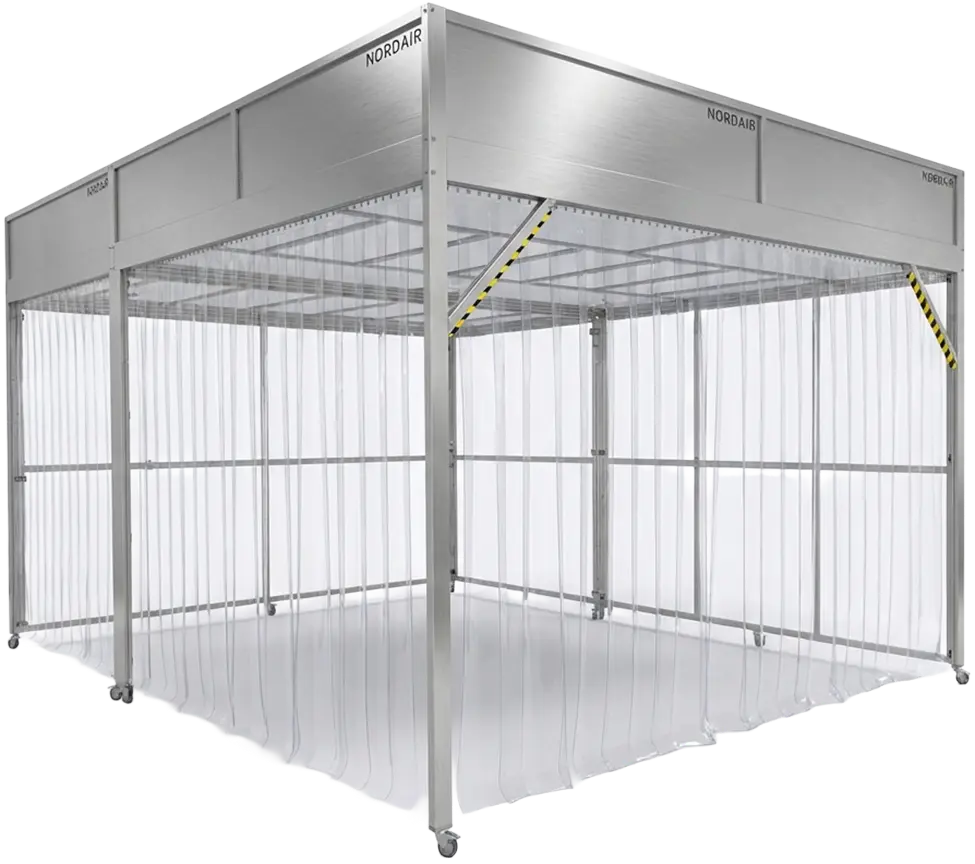
The modification of a cleanroom tent is primarily carried out using the integrated system grooves of the aluminum profiles, which allow monitors, ionizers or shelves to be assembled without machining. In addition, the purity class can be increased retrospectively by replacing passive ceiling tiles with active HEPA H14 filter modules in order to achieve stricter ISO limits.
Physics of the system groove: non-destructive integration
In contrast to static clean rooms (drywall or welded steel), the Nordair Systems cleanroom tent is based on aluminum construction profiles (45 × 45 mm or 90 × 90 mm). The technical core of the modifiability is System groove. This geometry makes it possible to mount peripheral devices in a force-locking manner using groove blocks without drilling through the material.
Load absorption and media management
A common misconception is that cleanroom tents are unstable temporary solutions. A correctly designed 45 mm profile system from Nordair Systems supports point loads of up to 40 kg per strut. This enables direct integration of:
- Monitor arms and HMI interfaces: For paperless documentation directly during the process.
- Ionization rods: To neutralize electrostatic charges (ESD protection) under the filter surface.
- Media channels: Compressed air and power lines are routed in the profile grooves and closed with cover profiles to eliminate dead spaces for dust deposits.
Scaling filter usage
The most critical modification concerns air purity itself. The ISO class is primarily defined by air exchange and filter occupancy in the ceiling grid. Since Nordair systems use a modular grid measure, passive blind plates can be used at any time against active HEPA H14 Filter Fan Units be swapped. This increases laminar flow density and improves recovery time without having to change the basic design.