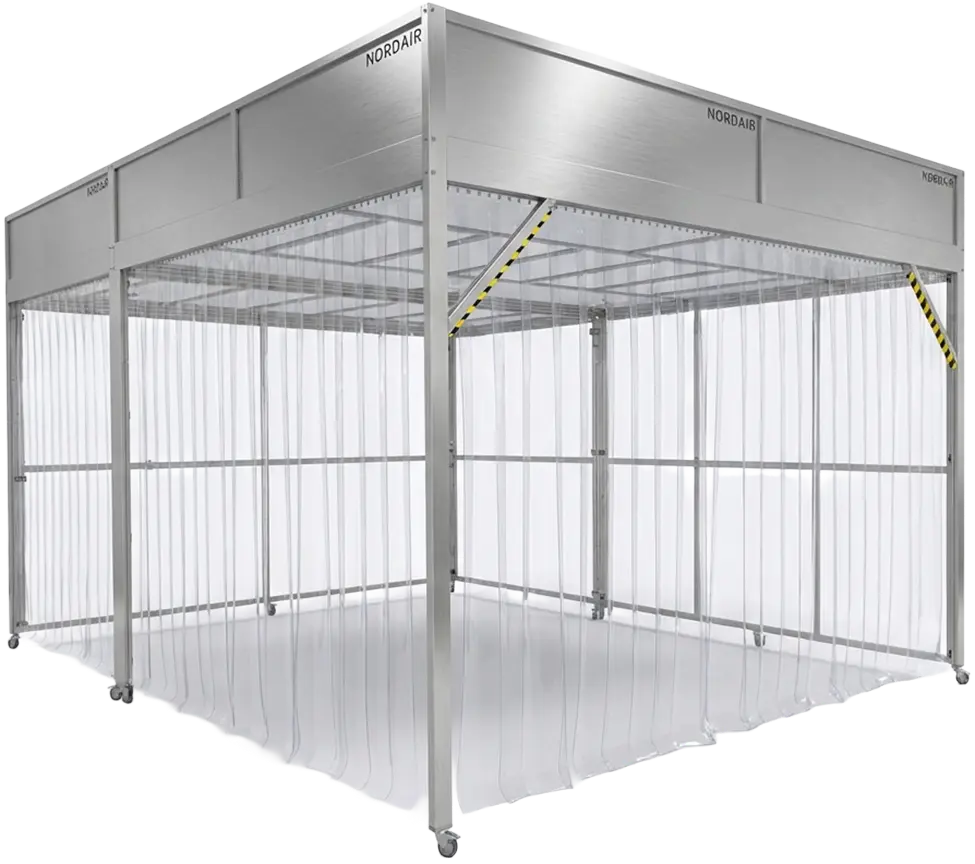
The load capacity is defined by the cross section of the aluminum profiles used. Nordair Systems uses 90 × 90 mm heavy-duty profiles for demanding requirements, which have an additional point load of at least 40 kg per segment Record safely (e.g. for monitors or filter technology) and at the same time stabilize vibration-sensitive processes due to their high mass.
Statics of the heavy-duty matrix: 90x90 mm profiles
The structural integrity of a Nordair Systems cleanroom tent is not based on simple plug-in systems, but on industrial aluminum construction profiles. For applications with increased requirements (e.g. housing of optical tables or large spans), we use profiles with a cross section of 90 × 90 mm one. This geometry offers an extremely high moment of inertia, which reduces deflection to a physical minimum even in wide designs.
Load support for peripherals (additional load)
A crucial parameter for engineering is usable additional load. Each individual profile segment is specified to add an additional weight of at least 40 kg without jeopardizing the overall statics. This is relevant for the integration of:
- Heavy FFU modules: Filter-fan units often weigh 15-20 kg.
- HMI panel PCs: Industrial monitors on swivel arms.
- Media supply: compressed air distributors and heavy cable harnesses.
These loads are formally introduced into the structure via slot blocks, which effectively distributes point loads over the profile flanks.